Explore This Resource
Learn about the Irish Setter, understand how breed rescue works, and discover what it takes to give a dog in need a wonderful second chance.
About Adoption
How breed-rescue adoption works, from application to a successful, lasting placement.
Learn moreThe Irish Setter
Temperament, energy, grooming, and health — everything that makes a setter a setter.
Learn moreAdoption FAQ
The questions adopters ask most, including the many joys of welcoming an older dog.
Learn moreSuccess Stories
Illustrative rescue journeys that show what a real second chance can look like.
Learn moreCare Guide
Practical, day-to-day guidance on feeding, training, exercise, and home setup.
Learn moreResources
Trusted breed clubs, kennel clubs, adoption networks, and veterinary organizations.
Learn moreAbout the Irish Setter

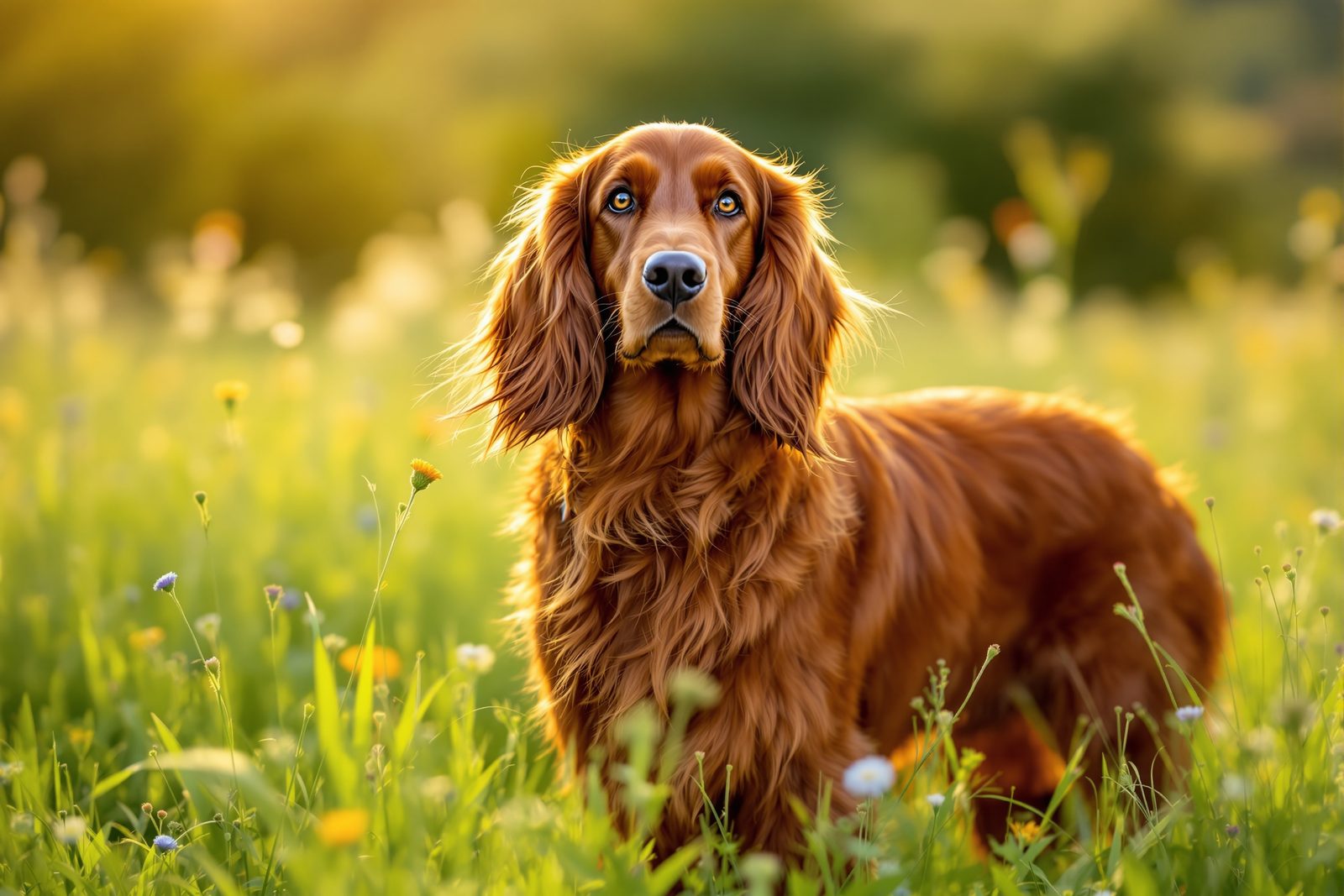
The Irish Setter is one of the most recognizable dogs in the world — a tall, elegant sporting breed crowned with a flowing mahogany-red coat. Bred in Ireland to range across open country and locate game birds, the Irish Setter is athletic, intelligent, and famously affectionate. They thrive on companionship, exercise, and being part of family life.
Because they are high-energy dogs that were built to run, Irish Setters need daily exercise and mental stimulation — they are not happy left alone in a yard for long stretches. The breed's playful, people-focused temperament is its greatest gift and the reason so many owners describe their setter as a once-in-a-lifetime dog. To learn more about the breed's official standard and history, the American Kennel Club and the Irish Setter Club of America are excellent starting points.
That energy is also the most common reason setters end up in rescue — not for anything they did, but because a well-meaning owner could not sustain the daily mileage year after year. Thinking honestly about whether your own routine can carry a sporting dog's daily miles is the most useful thing an adopter can do.
What Breed Rescue Does
Breed rescue is more than finding a dog a new house. A well-run rescue evaluates each dog's temperament in a foster home, provides veterinary care — examinations, vaccinations, spaying or neutering, and treatment for any health issues — and then carefully matches the dog with a home suited to its needs. The goal is always a lasting placement, not a quick handoff. The volunteers who make this possible transport dogs, foster them, help evaluate adopters, and support each dog through training and recovery.
Good rescues also do the quieter work of talking someone out of a setter, or into waiting a year. That conversation prevents a return later.